

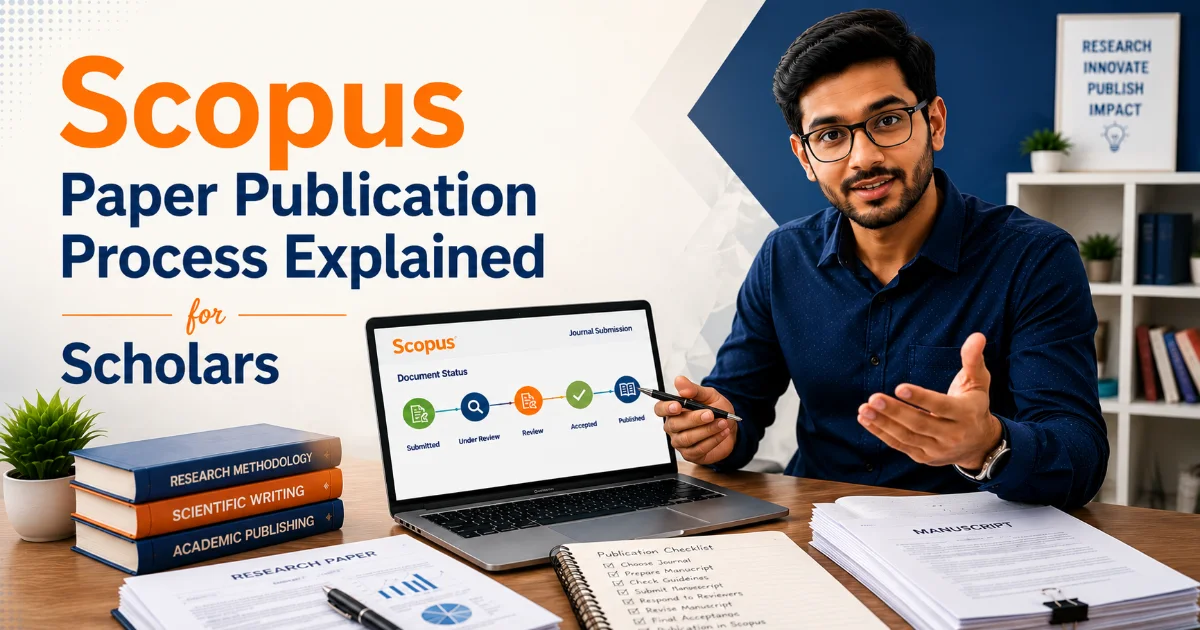
Publishing a research paper in a Scopus-indexed journal is one of the most important academic milestones for PhD scholars, engineering students, and academic researchers. However, many scholars struggle even after completing strong and innovative research work.
The real challenge begins when they try to publish the paper. Most manuscripts face rejection due to formatting issues, plagiarism problems, poor journal selection, or weak academic writing. In many cases, students do not understand the journal expectations or the publication workflow, which leads to repeated rejection and delays.
This guide explains the complete Scopus paper publication process step-by-step, common mistakes researchers make, and how proper guidance like Research Proposal Assistance, Journal Paper Writing Assistance can significantly improve acceptance chances in reputed journals.
Why Scholars Struggle in Scopus Publication
Many PhD scholars believe that good research is enough for publication. But in reality, Scopus journals evaluate multiple technical and academic factors. Choosing the right direction with Topic Selection Assistance helps scholars avoid early mistakes.
Common Problems Faced by Researchers:
-
Journal rejection due to mismatch of scope
- High plagiarism or similarity index
- Improper manuscript formatting
- Weak academic writing and grammar issues
- Incorrect citations and references
- Lack of journal submission knowledge
- Poor response to reviewer comments
- Delay in revision and resubmission process
Even high-quality research can be rejected if these issues are not handled properly.
Step-by-Step Scopus Paper Publication Process
Understanding the process helps researchers avoid mistakes and improve acceptance chances.
Step 1: Preparing the Research Manuscript for Scopus Journals
The first stage is preparing a complete research manuscript including:
- Abstract
- Introduction
- Literature Review
- Methodology
- Results and Discussion
- Conclusion
Proper structure is essential for journal acceptance.
Step 2: Evaluating Research Paper Quality Before Submission
Before submission, the paper must be evaluated for:
- Research quality
- Technical strength
- Clarity of explanation
- Formatting compliance
- Language accuracy
This step identifies weaknesses before journal submission.
Step 3: Selecting the Right Scopus Indexed Journal
Choosing the right journal is critical.
Factors considered:
- Scopus indexing status
- Journal scope and relevance
- Impact factor
- Acceptance rate
- Review time
- Publication fees
Wrong journal selection is one of the top reasons for rejection.
Step 4: Plagiarism Checking and Similarity Reduction
Most Scopus journals require low similarity index.
This stage includes:
- Plagiarism detection
- Content rewriting
- Citation correction
- Paraphrasing technical content
Maintaining originality is essential for acceptance.
Step 5: Formatting the Paper According to Journal Guidelines
Each journal has strict formatting guidelines.
Includes:
- Reference style correction
- Figure and table alignment
- Font and spacing adjustment
- Template-based editing
- Section structuring
Proper formatting improves reviewer impression.
Step 6: Academic Proofreading and Language Enhancement
At this stage, language quality is improved:
- Grammar correction
- Sentence restructuring
- Academic tone improvement
- Flow correction
- Technical clarity enhancement
Well-written papers have higher acceptance chances.
Step 7: Submitting the Paper to the Scopus Journal
After final preparation:
- Manuscript is submitted online
- Cover letter is prepared
- Author details are verified
- Journal confirmation is received
Peer Review Process in Scopus Journals
After manuscript submission, the journal sends the paper for peer review. Subject experts evaluate the research quality, originality, methodology, and technical contribution of the manuscript.
During this stage, reviewers may:
- Accept the paper
- Request minor revisions
- Request major revisions
- Reject the manuscript
The peer review process helps maintain the quality and credibility of Scopus-indexed journals.
Step 8: Responding to Reviewer Comments and Revisions
After submission, journals may request revisions.
Common tasks:
- Responding to reviewer comments
- Modifying manuscript sections
- Clarifying technical doubts
- Resubmission preparation
Proper response handling is crucial for final acceptance.
Successful Scopus Publication Case Study
Many research scholars who initially faced repeated rejection were able to successfully publish their papers after proper guidance.
For example:
- A PhD scholar from Andhra Pradesh had 3 rejected submissions due to formatting issues. After manuscript restructuring and journal matching support, the paper was accepted in a Scopus-indexed journal within the next submission cycle.
Such cases show that rejection is often not due to research quality, but due to publication process errors.
Benefits of Professional Scopus Publication Assistance
Professional guidance helps researchers in:
- Selecting the right journal
- Improving manuscript quality
- Reducing plagiarism
- Formatting according to journal standards
- Increasing acceptance probability
- Saving time during submission
- Understanding reviewer expectations
This support is especially helpful for first-time authors.
Complete Scopus Paper Publication Support Services
Scopus Publication Support Includes:
- Journal selection assistance
- Manuscript review
- Plagiarism reduction
- Formatting support
- Academic proofreading
- Citation correction
- Reviewer response support
- Submission guidance
- Resubmission assistance
Looking for Scopus Journal Publication Support?
If you are struggling with rejection, plagiarism, or journal selection, expert guidance can help you publish your research successfully.
We Provide:
- Free initial manuscript review
- Journal recommendation
- Plagiarism checking support
- Complete publication guidance
Contact Us Today to Get:
- Faster publication support
- Higher acceptance chances
- Step-by-step guidance
Start your Scopus publication journey with expert help today.
Scopus Paper Publication Assistance for Scholars in Andhra Pradesh
Research scholars from:
- Tirupati
- Nellore
- Vijayawada
- Visakhapatnam
- Kurnool
- Kadapa
- Anantapur
can get complete Scopus publication support through online and offline consultation services. Local guidance helps students communicate easily and complete publication faster with the help of Contact Us.
Tips to Improve Scopus Publication Success Rate

Researchers can improve their chances of publication by following proper manuscript preparation and submission practices.
Important tips include:
- Selecting journals carefully
- Following formatting guidelines correctly
- Maintaining low plagiarism percentage
- Using recent and relevant references
- Improving academic writing quality
- Responding professionally to reviewer comments
Careful preparation and proper guidance significantly improve Scopus publication success rates.
Publish Your Research Paper Successfully in Scopus Journals
Publishing in a Scopus-indexed journal is not just about research quality it is about correct presentation, proper formatting, journal selection strategy, and reviewer communication.
With the right guidance, you can avoid rejection, save time, and successfully publish your research paper in reputed journals through Publication Assistance.
Get expert Scopus paper publication assistance and turn your research into a published achievement today.