
For nearly a decade, Computer Science (CSE), Information Technology (IT), Artificial Intelligence & Machine Learning (AI & ML), Data Science, and Cybersecurity have dominated engineering admissions. Students believed that software jobs offered the fastest route to high-paying careers.
However, the 2026 engineering admission season is revealing a noticeable shift. Many students are now choosing Electronics and Communication Engineering (ECE) and other core branches such as Mechanical, Civil, Electrical, and Electronics over traditional software-focused courses.
Why Is This Shift Happening?
The rapid advancement of Artificial Intelligence has transformed the technology industry. AI-powered tools are automating routine programming tasks, code generation, testing, and software maintenance. As a result, students are becoming more cautious about relying solely on conventional software careers.
At the same time, new industries such as semiconductor manufacturing, chip design, robotics, embedded systems, 5G and 6G communication, Internet of Things (IoT), electric vehicles (EVs), and industrial automation are expanding rapidly. These sectors require engineers with strong hardware and communication system expertise, making ECE one of the most sought-after engineering branches once again.
Why ECE Is Gaining Popularity
Unlike a few years ago, when ECE was often considered a second choice after Computer Science, today's industry requirements have changed significantly.
Modern AI systems cannot function without advanced processors, semiconductor chips, sensors, communication networks, and embedded hardware. Designing and developing these technologies requires skilled Electronics and Communication engineers.
Government initiatives to strengthen India's semiconductor ecosystem, along with increasing investments from global technology companies, are creating new career opportunities in chip manufacturing and electronics design. This has significantly increased demand for ECE graduates across the country.
More Career Options Than Ever Before
One of the biggest advantages of ECE is its versatility. Graduates are not limited to a single industry. They can build careers in:
- Semiconductor and Chip Design
- Embedded Systems
- Robotics and Automation
- Telecommunications
- Electric Vehicles
- Aerospace and Defence
- Consumer Electronics
- IoT Solutions
- AI Hardware Development
- Software Development
Many ECE graduates also move into software engineering, data science, artificial intelligence, and cloud computing after acquiring the required programming skills.
Does This Mean Computer Science Has Lost Its Value?
Absolutely not.
Computer Science continues to be one of the strongest engineering disciplines. However, the expectations of employers are changing. Basic coding skills alone are no longer sufficient. Companies now seek professionals with expertise in AI, cloud computing, cybersecurity, system design, and software architecture.
Similarly, core engineering graduates who combine their domain knowledge with AI, programming, and digital technologies will have a significant competitive advantage.
What This Means for Future Researchers
For students planning to pursue M.Tech or PhD programs, this changing trend presents exciting research opportunities.
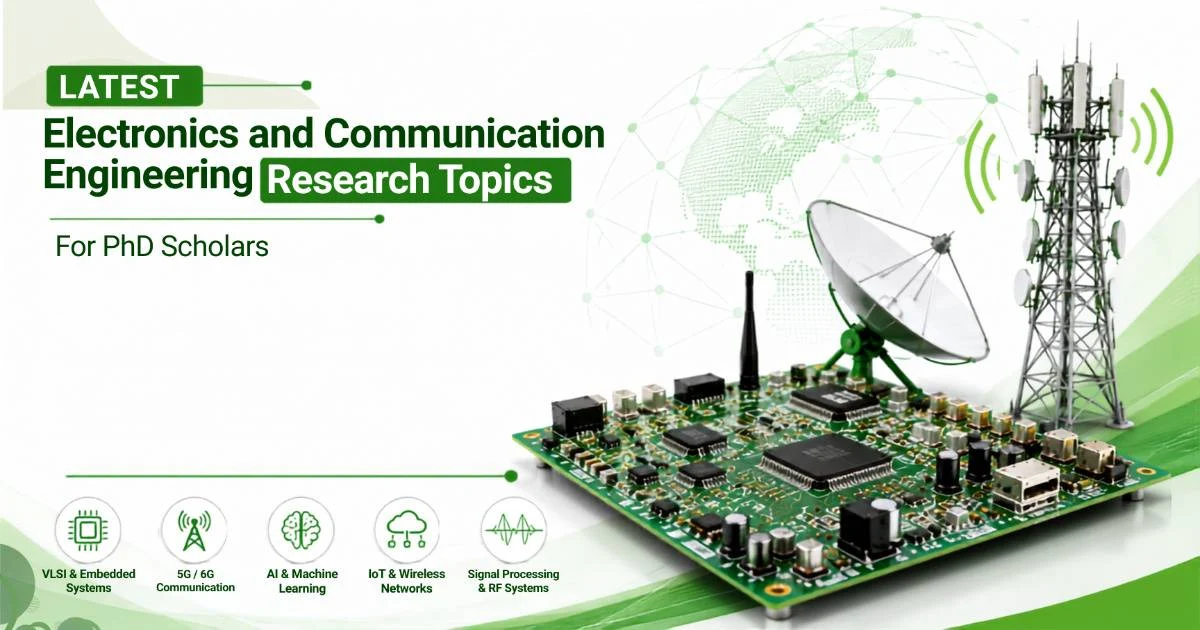
Research areas such as AI-enabled embedded systems, semiconductor technologies, intelligent robotics, autonomous vehicles, smart communication networks, IoT security, VLSI design, and industrial automation are expected to grow rapidly over the next decade.
Rather than focusing only on traditional software research, scholars should consider interdisciplinary research that combines Artificial Intelligence with core engineering disciplines. Such research is likely to have greater academic impact and stronger industry relevance.
Final Thoughts
The engineering landscape is evolving, not because Computer Science is becoming obsolete, but because technology itself is becoming more integrated. The future belongs to engineers who understand both hardware and software while continuously adapting to emerging technologies.
Choosing an engineering branch should never be based solely on current trends or headlines. Students should consider their interests, strengths, career goals, and willingness to learn new technologies throughout their professional journey.
As AI continues to reshape industries, engineers who combine domain expertise with modern technical skills will be best positioned for long-term success. For research scholars, this evolution also opens the door to impactful interdisciplinary research that addresses real-world technological challenges.